



bLOG

Beyond Smart Cities:
Why the Next Urban Revolution Is About Intelligence, Not Technology
Admin – 17/11/2026
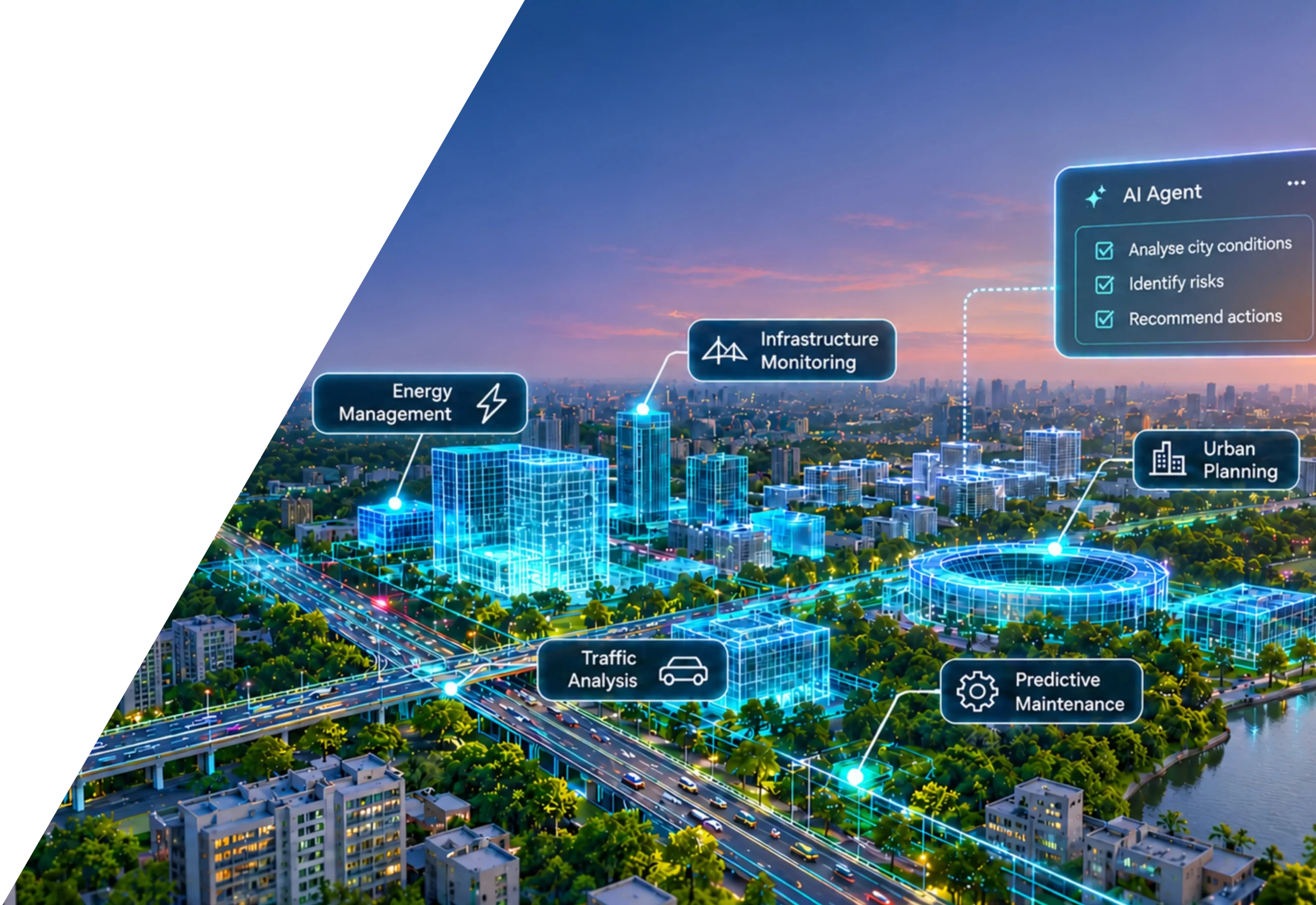
From connected infrastructure to AI-powered digital twins, emerging technologies are changing how cities understand their operations, anticipate challenges and plan for the future.
The Intelligence Gap in Today’s Smart Cities
In October 2026, NVIDIA highlighted how cities and technology partners across Europe are developing AI agents that work with digital twins to support urban operations. These systems are being explored for applications such as traffic analysis, infrastructure monitoring, predictive maintenance and urban planning.
One example comes from France, where the Department of Côte-d’Or and its technology partners have developed AI agents that combine sensor, infrastructure and historical data within a digital twin. Covering more than 500 public buildings, the system supports energy management, safety, compliance and climate resilience. NVIDIA reports that it has reduced document search time from weeks to minutes and operating costs by 10%.
This development points towards a larger shift in urban technology. The focus is moving beyond connecting infrastructure and displaying information towards systems that can interpret conditions, identify relationships and support decisions.
India has already established an important foundation. By August 2023, Integrated Command and Control Centres (ICCCs) were operational in all 100 cities under the Smart Cities Mission, bringing services such as traffic, public safety, water supply and waste management into a common operational environment.
However, visibility is only the first step. The next challenge is understanding how different urban systems influence one another and what action their combined information calls for.
Giving Cities a Digital Environment to Think Ahead
Digital twins are becoming an important part of this transition. More than three-dimensional models, they are digital representations of physical infrastructure that can be updated with operational data and used to examine changing conditions.
By combining GIS, sensor information, infrastructure records and analytical models, digital twins allow planners to explore scenarios before implementing changes on the ground. A proposed road development, for instance, can be evaluated against surrounding traffic patterns, drainage capacity and energy requirements.
The technology is also evolving beyond manually created models. Japan’s Project PLATEAU, led by its Ministry of Land, Infrastructure, Transport and Tourism, has been developing 3D city models across hundreds of cities. Its work includes exploring AI and other automated methods to create and update these models, making urban information more accessible for planning and analysis.
The value of a digital twin lies in its ability to connect the physical and digital environments. It allows authorities to examine not just what exists, but how infrastructure might respond to changing conditions and proposed interventions.
When AI Moves from Analysis to Action
The integration of AI is taking this capability further. Traditional monitoring systems alert authorities when something goes wrong, while predictive analytics can identify patterns that indicate potential issues. Agentic AI introduces another layer by allowing systems to work through defined tasks, retrieve relevant information and prepare workflows for human approval.
Consider a drainage issue during heavy rainfall. An AI agent could examine rainfall readings, drainage records, geographical information and previous incidents to help identify affected locations and route the issue to the appropriate department.
The objective is not to replace human judgement. It is to reduce the time spent gathering information and help decision-makers act with a clearer understanding of the situation.
NVIDIA’s European examples demonstrate how these capabilities are being explored across public services, buildings, mobility and infrastructure management. The projects are at different stages of development, but they indicate a growing interest in combining AI agents with digital twins to support more responsive operations.
For cities managing interconnected infrastructure, this could make coordination more responsive. However, such systems depend on reliable data, interoperable platforms and clearly defined operational processes.
Where Connected Infrastructure Meets Real-World Operations
Industrial estates make the importance of integrated infrastructure particularly visible. They bring heavy energy demand, intensive water use, freight movement and environmental monitoring into a concentrated area. A disruption in one service can affect several others.
This is the approach Amnex took at a large state-run industrial estate in western India.
The estate operates through two ICCCs, supported by a smart data centre and disaster recovery infrastructure. Its connected systems include 313 CCTV cameras, 1,500 adaptive smart streetlights, 1,800 smart water meters and six water-quality monitoring systems. More than 15,000 metres of optical fibre support connectivity, while ten smart poles provide air-quality sensing, public address systems and emergency call boxes. A 3D GIS layer covering more than five square kilometres places these assets in their geographical context.
Together, these capabilities support centralised monitoring, coordination between departments, energy management and continuous visibility into water consumption and quality.
More importantly, they establish the connected infrastructure and operational data foundation on which more advanced intelligence can develop. Digital twins and AI-driven systems require accurate asset information, reliable connectivity and data that reflects actual conditions on the ground.
Designing Cities for What Comes Next
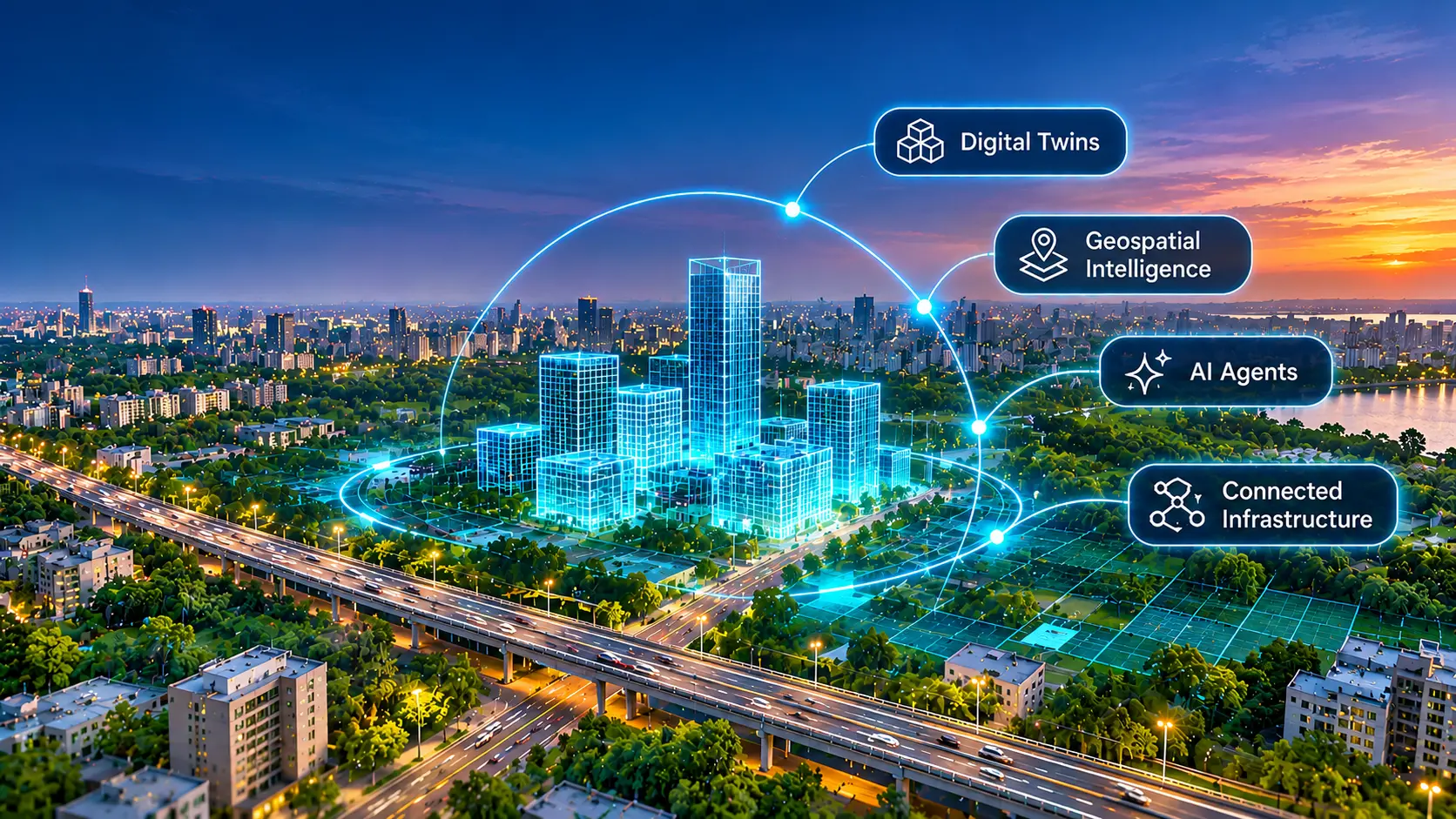
The evolution of smart cities will not happen through AI alone. It requires a combination of geospatial intelligence, connected infrastructure, reliable data, interoperable systems and workflows that allow departments to act on the insights generated.
Digital twins can help cities understand their physical environments and test possible scenarios. Geospatial intelligence adds location-based context, while AI can identify patterns, support analysis and help translate insights into operational workflows.
As urban populations grow and infrastructure faces increasing pressure, the ability to anticipate challenges will become as important as monitoring existing conditions. Cities will need systems that can connect information across departments, understand the wider implications of decisions and support coordinated action.
The first generation of smart cities learned to see. The next must learn to understand, anticipate and respond.

You may also like