



bLOG

Why India’s Farmers Are Going Digital in 2026?
What It Means for Food Security?
Admin – 06/07/2026
Agriculture’s Biggest Challenge Is No Longer Production
For decades, India’s agricultural focus was on increasing production. Today, the challenge has shifted. Climate variability, delayed monsoons, unpredictable rainfall, rising input costs, labour shortages, and growing pressure on natural resources are making farming more complex than ever.
A delayed monsoon doesn’t just postpone sowing. It affects irrigation schedules, crop health, pest management, and eventually, yields.
This is why digital agriculture is becoming more than a technology upgrade. It is emerging as an essential part of building a resilient and food-secure agricultural system. The goal is no longer to collect more data, but to turn it into timely decisions.
From Weather Forecasts to Decision Intelligence
Weather has always influenced farming, but in 2026, weather data alone is no longer enough. A rainfall prediction cannot tell a farmer whether the soil has enough moisture for sowing, whether crops are already showing signs of stress, or if changing humidity could increase the risk of pests and diseases.
Answering these questions requires multiple sources of information working together, including hyperlocal weather forecasts, satellite imagery, GIS, remote sensing, crop health indicators, field observations, and predictive analytics.
When these datasets come together, they provide a much clearer picture of what’s happening on the ground and help farmers, agriculture departments, and policymakers make faster, more informed decisions.
CropTrack: A Connected Platform for Modern Agriculture
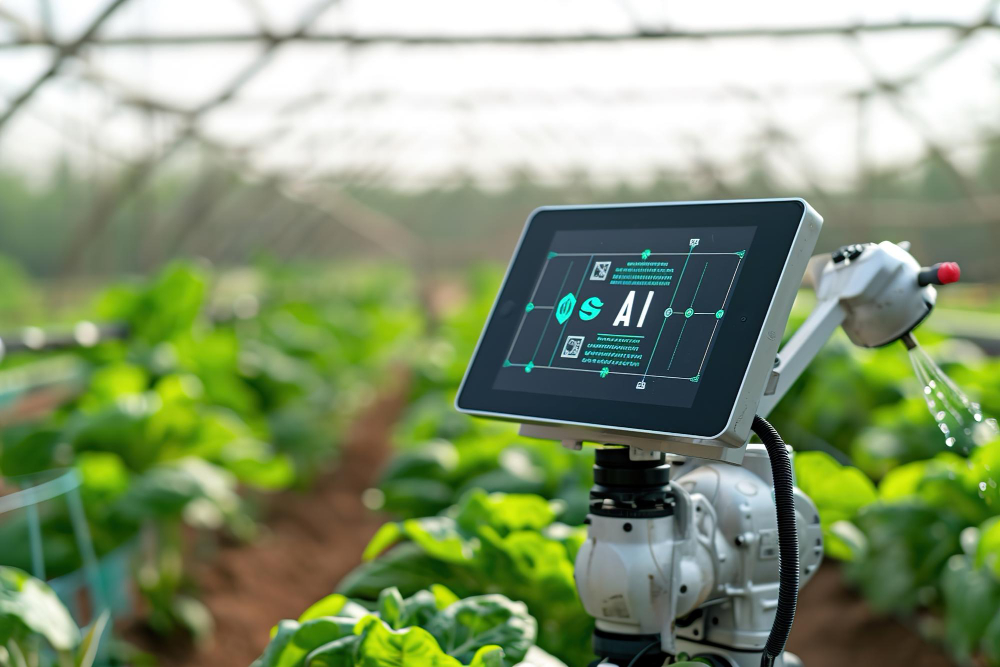
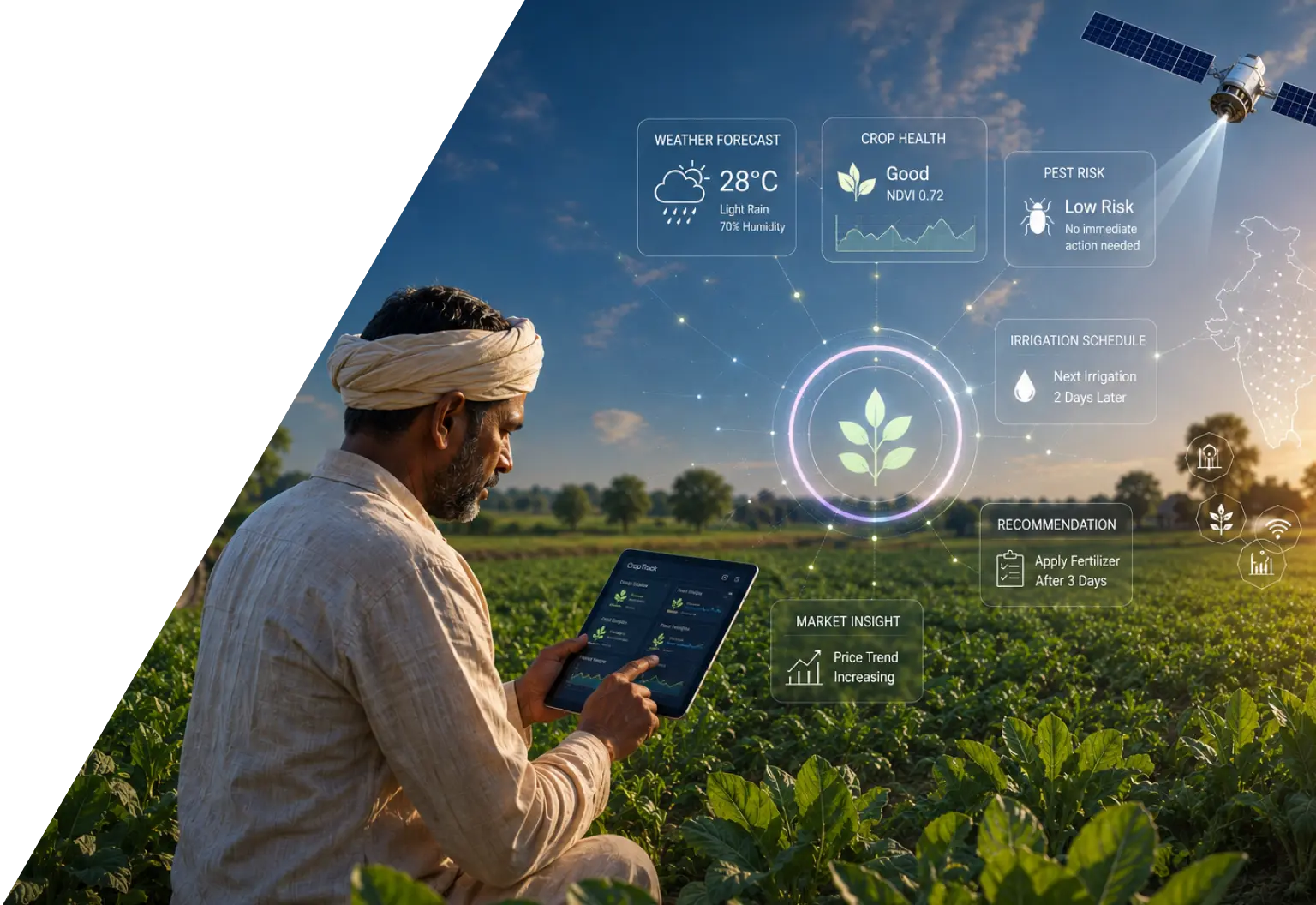
Amnex’s digital agriculture platform – CropTrack, brings these capabilities together in a single ecosystem. Instead of treating weather, crop monitoring, and advisory services as separate functions, it connects them to support decisions throughout the crop lifecycle.
The platform enables:
- Hyperlocal weather insights for better planning of sowing, irrigation, fertilization, and harvesting.
- Satellite-based crop monitoring to identify stress and track crop growth.
- AI-assisted pest and disease detection for early intervention.
- Personalized farm advisories based on real-time field conditions.
- Market intelligence and crop planning to support better production decisions.
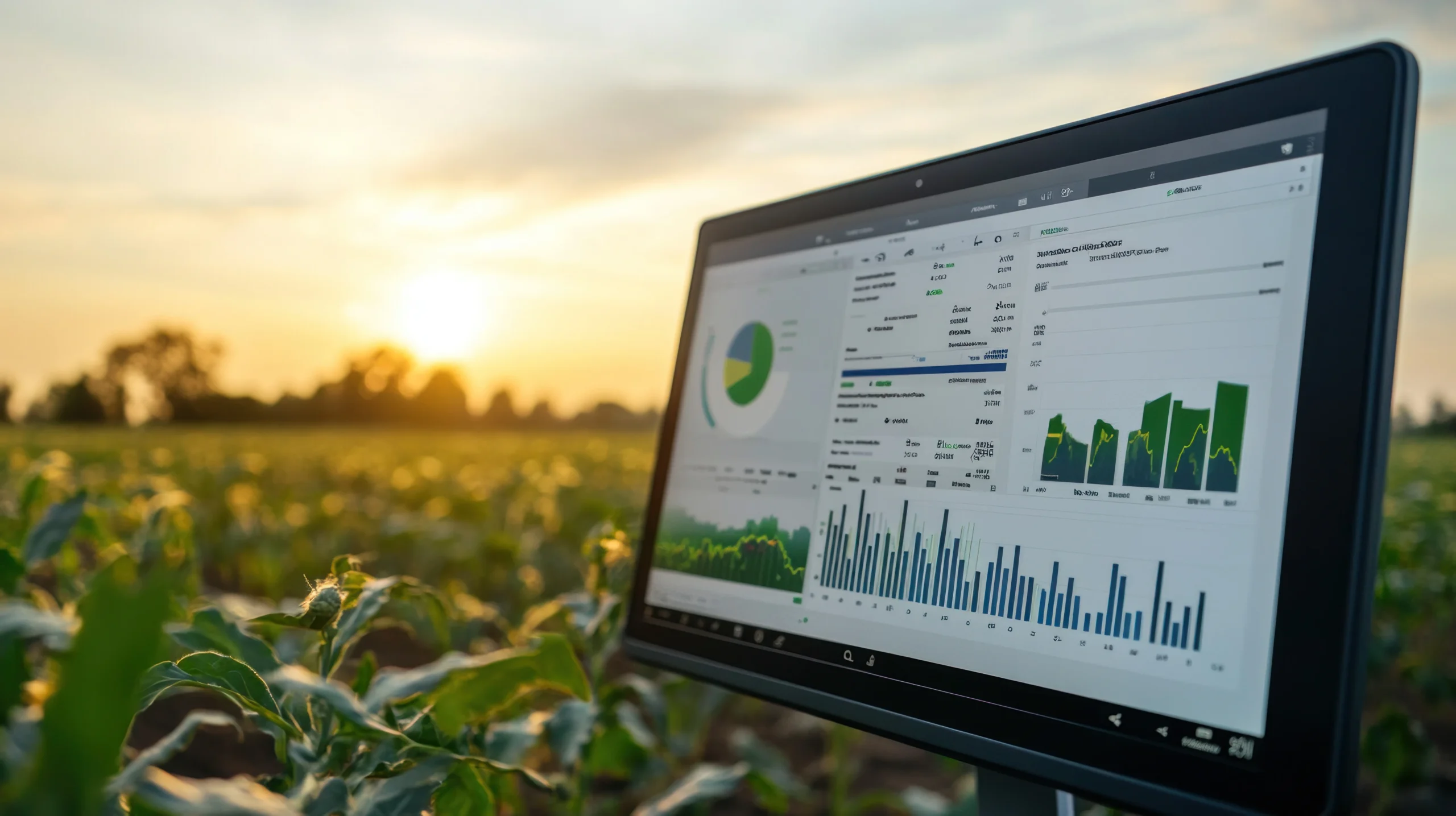
- Digital farm records and analytics for continuous visibility throughout the season.
The result is a connected view of the farm, where information from multiple sources is translated into practical recommendations rather than isolated reports.
From Data to Impact: CropTrack in Action
The value of integrated agricultural intelligence is already being demonstrated through Amnex’s precision agriculture initiatives. In a major farming state in western India, Amnex implemented a large-scale crop monitoring platform combining satellite imagery, GIS, remote sensing, AI, and mobile technologies across nearly 196,000 sq. km. The implementation delivered measurable outcomes, including:
- 80% reduction in manual field data collection.
- 50% faster crop insurance claim processing.
- Improved crop forecasting and acreage estimation.
- Faster damage assessment during extreme weather events.
- Enhanced decision-making for agriculture departments.
The project illustrates how digital platforms like CropTrack can transform agricultural governance from reactive monitoring to continuous intelligence.
The Future of AgriTech
The next phase of digital agriculture will not be defined by individual technologies but by their integration. Hyperlocal forecasting, AI, satellite imagery, remote sensing, GIS, drones, and predictive analytics are converging into unified platforms that provide a complete view of agricultural conditions.
- For farmers, this means better decisions throughout the crop cycle.
- For governments, it means improved planning and faster interventions.
- For the country, it means building a more resilient and food-secure agricultural system.
CropTrack represents this evolution by transforming diverse agricultural datasets into actionable intelligence, helping stakeholders respond to uncertainty with greater precision, speed, and confidence.

You may also like